What Is a FRACS Plastic Surgeon?
Tue 26th May 2026
Choosing a Plastic Surgeon is one of the most important decisions you’ll make, so it pays to know what to look for when you’re doing your research. In particular, it’s vital to check that, like Dr Dona, they are a fellow of the Royal Australasian College of Surgeons (FRACS). Here’s what you need to know.
What Does FRACS Mean?
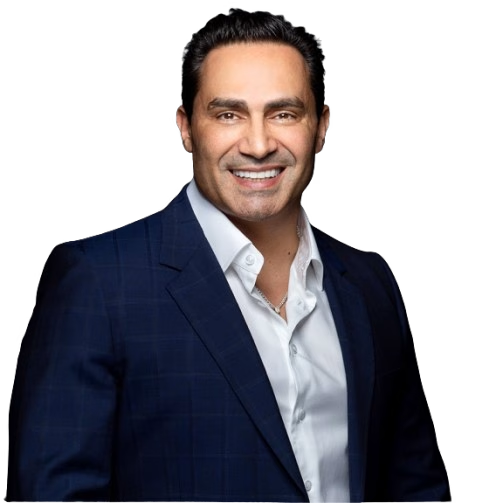
Dr Eddy Dona is a fellow of the Royal Australasian College of Surgeons (FRACS), a vital qualification to look for. FRACS stands for Fellow of the Royal Australasian College of Surgeons.
According to the Australian Society of Plastic Surgeons, “The distinction is only awarded to specialist surgeons who have completed a minimum of 12 years medical and surgical education, including at least five years of specialist postgraduate training. A Specialist Plastic Surgeon with the letters ‘FRACS’ appearing after his or her name is accredited to perform invasive reconstructive and cosmetic plastic surgery.”
The FRACS Training Pathway
Surgeons like Dr Dona, who are Fellows of the Royal Australasian College of Surgeons (RACS), are highly trained, having undergone more than 12 years of rigorous training. They have undergone at least five or six years of surgical training certified by the Australian Medical Council (AMC) or the Medical Council of New Zealand (MCNZ). This is in addition to their medical degree and prevocational training in a hospital.
The RACS website states that RACS surgeons are also trained to “provide the physiological, ethical, psychological, pharmacological, surgical and medical expertise to safely diagnose, treat and manage surgical patients.”
This training and practice allows them to put patient safety first during all consultations, surgery and post-operative care.
Once a surgeon has completed their training program, they are admitted as a fellow to the Royal Australasian College of Surgeons. At this point, they are permitted to use the post-nominal ‘FRACS’. This fellowship also allows them to be recognised by AHPRA (the Australian Health Practitioner Regulation Agency).
After they have been admitted to the RACS, they are subject to ongoing continuing professional development (CPD) and ethical reviews.
Important: ‘Surgeon’ Is Now A Protected Title
Up until 2023, two medical titles often confuse the public:
- Plastic Surgeon
- Cosmetic Surgeon
Although these titles sound similar, they are vastly different.
A ‘Specialist Plastic Surgeon’ is a protected title given to a doctor who has completed at least 12 years of training, including specialised training in reconstructive and cosmetic surgery, and holds a fellowship of the Royal Australasian College of Surgeons (FRACS). Dr Eddy Dona is a Specialist Plastic Surgeon.
Up until 2023, a ‘Cosmetic Surgeon’ was a title any registered doctor could use, often with limited training, as it was not a formally recognised medical speciality.
However, things have now changed. Many doctors using the title ‘cosmetic surgeon’ can no longer do so.
In 2023, a new legislation was passed that legally protects the title ‘surgeon’ from being used by any doctor without the necessary qualifications and training.
This legislation was aimed at stopping non-specialist GPs and non-surgically trained doctors from using the title ‘surgeon’ in advertising. Before the reforms, some practitioners without recognised surgical specialist training were marketing themselves as ‘cosmetic surgeons’, which was confusing the public.
According to AHPRA, “Only medical practitioners holding specialist registration in surgery, obstetrics and gynaecology, or ophthalmology can call themselves ‘surgeon’, including ‘cosmetic surgeon’.”
In summary, most doctors today will fall into one of three broad groups:
- Specialist Plastic Surgeons – highly trained surgical specialists
- Other surgically trained specialists – surgeons performing limited cosmetic procedures within their field
- Cosmetic Doctors – general medical practitioners mostly performing non-surgical cosmetic treatments.
Therefore, when searching for a medical doctor to perform a surgical procedure, we recommend you look for a doctor with ‘surgeon’ included in their title (e.g. Dr Eddy Dona, Reconstructive and Plastic Surgeon).
Why Specialist Registrations Matter
Specialist registrations matter because they help patients understand the level and type of training the practitioner has completed. It plays an important part in informed decision-making.
As we’ve explained, a Specialist Reconstructive and Plastic Surgeon has spent a minimum of 12 years of training, including general medical training, accredited hospital-based training, examinations and supervised clinical experience in a recognised speciality area.
When you’re considering cosmetic surgery, it pays to remember that it may involve anaesthesia, surgical risks, complication management and post-operative care. So, understanding a practitioner’s training in these areas is vital.
The 2023 AHPRA title reforms were partially created to help reduce confusion about who had recognised surgical specialist training and who didn’t. However, it’s important to note that specialist registration doesn’t automatically determine other important factors, such as a doctor’s bedside manner or level of skill. It also doesn’t guarantee outcomes.
When deciding on a surgeon, we also encourage you to consider factors such as experience, accreditation, word-of-mouth recommendations, communication skills, and the consultation process. Finally, you should feel comfortable with the practitioner and be able to talk to your doctor with ease.
How To Verify A Surgeon’s Qualifications With AHPRA
Members of the public can easily verify a surgeon’s qualifications by going to the AHPRA Register of Practitioners. This is a free, public tool that can confirm:
- If a doctor is registered
- Their speciality
- Any conditions on their practice (i.e., if an adjudicating body or national board has imposed a condition on the practitioner, or an endorsement of registration. It aims to restrict a practitioner’s practice in some way to protect the public.)
You can reach the official AHPRA Register of Practitioners here.
- In the ‘Health Profession’ drop-down box, search for ‘Medical Practitioner’.
- Search for your practitioner by their name or AHPRA number. (It usually starts with MED)
- Check their registration type by looking for ‘Registration Type – Specialist’.
- A legitimate surgeon will be registered in a Speciality Field, such as ‘Plastic and Reconstructive Surgery’ or ‘Orthopaedic Surgery’.
- View their qualifications (e.g., MBBS or FRACS)
For more information about choosing a Plastic Surgeon, please see our article here >
References
AHPRA: Thinking of having plastic surgery? https://www.ahpra.gov.au/Resources/Cosmetic-surgery-hub/Information-for-the-public.aspx
AHPRA: Win for patient safety with ‘surgeon’ now protected title
https://www.ahpra.gov.au/News/2023-09-13-Title-bill-passes.aspx
Royal Australasian College of Surgeons
https://www.surgeons.org/