What to Look for & Questions to Ask When Choosing Your Plastic Surgeon
Thu 21st May 2026
People consider surgery for a range of reasons, some cosmetic, while others are reconstructive. Whatever the reason, the decision to choose a surgeon and undergo surgery is major and requires careful consideration.
Choosing a Plastic Surgeon who’s right for you and your procedure is a multifaceted process and shouldn’t be rushed. You’ll need to verify technical details such as their qualifications and memberships, learn about their experience and specialities, and all the details of the procedure.
Look for the title of ‘surgeon’
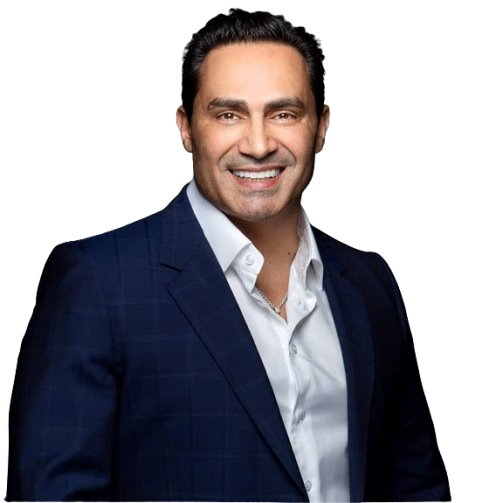
The first thing to determine is the doctor’s qualifications. Letters after a name may look impressive, but it’s important to know what they mean. When considering a surgical procedure, it’s highly recommended that your doctor has the protected title of ‘surgeon’. Dr Dona’s title is ‘Dr Eddy Dona, Specialist Plastic and Reconstructive Surgeon’. This is important for reasons we’ll explain.
Plastic Surgeon Versus Cosmetic Doctor
In 2023, a new legislation was passed that legally protects the title ‘surgeon’ from being used by any doctor without the necessary qualifications and training.
Before this time, any registered medical practitioner could call themselves a surgeon, even if they were not registered in a surgical speciality or had not completed specialist training in surgery.
This caused confusion among the public. After all, a ‘Cosmetic Surgeon’ sounds similar to a ‘Plastic Surgeon’. In reality, though, they are far different. Here’s how.
Reconstructive and Plastic Surgeon: A doctor who has completed at least 12 years of training, including specialised training in reconstructive and cosmetic surgery, and holds a fellowship of the Royal Australasian College of Surgeons (FRACS). Dr Eddy Dona is a Specialist Plastic Surgeon.
Cosmetic Doctor: A general medical practitioner who provides cosmetic treatments but does not hold specialist surgical registration that would allow them to use the protected title of ‘surgeon’. They typically perform non-surgical procedures such as cosmetic injectables and laser treatments. Some may also perform cosmetic procedures such as Breast Augmentation, but they do not have the training, experience, or qualifications to be assigned the protected title of ‘surgeon’.
For more information about what it means to be an FRACS Plastic Surgeon, please see our article here >
Book A Consultation
To determine whether a surgeon is right for you and if your desired procedure is appropriate, the first step is to book an initial consultation.
During your consultation with Dr Dona at Bella Plastic Surgery, you can discuss your concerns, explore available surgical options, and ask any questions you may have.
He will also perform a thorough clinical assessment that carefully considers your individual needs and concerns. If Dr Dona considers you a suitable candidate, he will talk through many issues in detail, including:
- what the surgery involves
- the risks and potential complications
- the recovery period and any restrictions or additional treatment you may require
- total cost, including details of whether a deposit is required and payment dates, refund of deposits, payments for follow-up care and possible further cost for revision surgery or additional treatment
- the complaints process and how to make a complaint
Dr Dona will also allow you to ask any questions or seek extra information before progressing with surgery.
You’ll also be given the mandatory cooling-off period of at least seven days after your consent before the surgery is booked or paid for.
Verifying Your Surgeon’s Qualifications
To ensure that you know that Dr Dona is optimally qualified to perform your procedure, it’s vital to understand the following.
Look for FRACS (Plast): FRACS (Plast) stands for Fellow of the Royal Australasian College of Surgeons (Plastic and Reconstructive Surgery). It is the premier qualification for specialised Plastic Surgeons in Australia and New Zealand, and it confirms that he has completed at least 12 years of medical and specialist training, including at least five years of specialist post-graduate training.
A Specialist Plastic Surgeon, such as Dr Dona, with ‘FRACS’ following their name, is accredited to perform invasive reconstructive and cosmetic plastic surgery.
What is AHPRA registration verification? AHPRA registration verification is the process of confirming that a health practitioner in Australia holds current, valid AHPRA (Australian Health Practitioner Regulation Agency) registration to practice legally. This verification is a quick, straightforward process that can be performed online by following the prompts.
Questions to Ask About Your Procedure
It’s important you understand what your procedure entails. Here are a few questions you may want to ask.
- Do you think I’m an appropriate candidate for this procedure?
- How often have you performed this procedure?
- How long will the procedure take?
- How long can I expect the results to last?
- Will I need further procedures over time?
- What will my scars look like?
- What happens if I’m not happy with the results?
Questions To Help Choose Your Surgeon
- What are your formal surgical qualifications?
- Are you a Specialist Plastic Surgeon (FRACS qualified)?
- What hospital-based surgical training have you completed?
- How often do you perform this procedure?
- Where will my surgery be performed?
- What are the risks and how are complications managed?
Questions to Ask About Recovery
- How long will my recovery take?
- Will I need someone with me at home?
- When can I return to work?
- When can I drive again?
- When can I swim again?
- When can I return to the gym?
Understanding Informed Consent
Informed consent for surgery is a mandatory, voluntary process between a surgeon and patient. The surgeon educates a patient about their condition and the proposed procedure, explaining all risks, benefits, and alternatives. This provides the patient with an understanding of what they are agreeing to, allowing them to make an informed, autonomous decision to accept or refuse treatment.
What to Bring to Your Consultation
Before your consultation with Dr Dona, you’ll need to obtain a valid referral from your General Practitioner (GP). You can make your appointment without a referral, but you must ensure you have it with you (or have sent it to the practice) in time for your consultation.
You’ll also need to bring any relevant medical records, a list of current medications and your insurance information to your consultation.
Finally, we recommend bringing your list of questions, so you leave feeling fully informed about Dr Dona and your procedure.
References:
AHPRA: Thinking of having plastic surgery? https://www.ahpra.gov.au/Resources/Cosmetic-surgery-hub/Information-for-the-public.aspx
AHPRA: Win for patient safety with ‘surgeon’ now protected title
https://www.ahpra.gov.au/News/2023-09-13-Title-bill-passes.aspx
Royal Australasian College of Surgeons
https://www.surgeons.org/