Breast Implants
Breast augmentation, also called bilateral augmentation mammoplasty (BAM) or breast implants, is a cosmetic surgical procedure that involves placing silicone implants to increase breast size. Breast augmentation is one of the most commonly performed cosmetic procedures in Sydney and worldwide. Individuals consider the surgery for a range of personal reasons related to breast size or breast proportions.
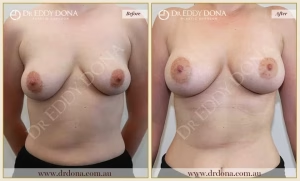
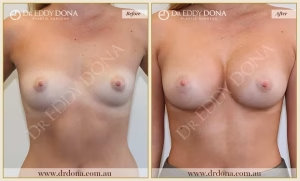
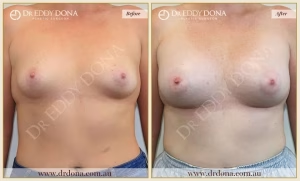
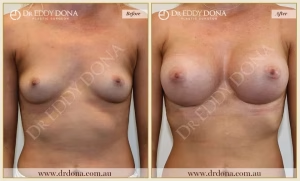
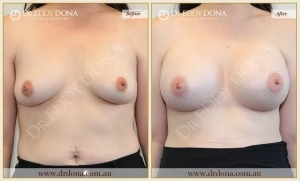
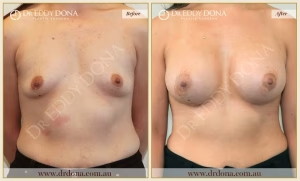
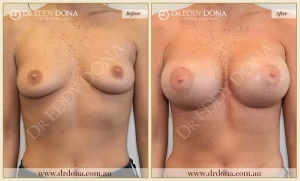
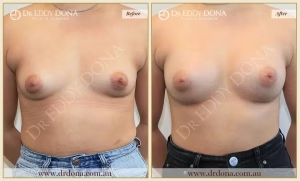
The displayed before and after pictures are provided as an educational tool to demonstrate some of the results achievable from plastic surgery. All surgeries on this page are performed by Dr Eddy Dona and are published with the written consent by the patients
Specialist Plastic Surgeon Dr Eddy Dona has dedicated many years of his career to Breast Augmentation Surgery. Known for his strong attention to detail and thoughtful approach, Dr Dona combines creativity, science and experience to provide personalised care for every patient.
“The perpetual pursuit of perfection is what drives me.” – Dr Dona
Individuals may consider this procedure for several reasons, such as:
Breast Augmentation is performed using various implant types, sizes and surgical approaches, all of which are discussed in detail during a consultation with Dr Dona
Breast augmentation involves several key considerations. During your consultation, Dr Dona will assess your anatomy and discuss three primary concerns: implant options, incision location and pocket placement. These factors work together to determine what may be most suitable for your individual frame.
Breast implants vary in shape, surface and projection (profile):
These factors influence the overall feel and appearance of the breast and are discussed in detail during your assessment.
Most breast augmentations performed by Dr Dona use an incision placed within the lower breast fold, as this location provides direct access to the pocket.
Less common alternatives include the lower areolar border or the armpit, each with its own considerations. The most appropriate option depends on your anatomy and surgical planning.
Pocket placement refers to where the implant sits in relation to the pectoralis major (pec) muscle.
In subpectoral placement, the upper implant sits beneath the muscle, but the lower portion naturally extends below the muscle border.
This is the standard under-muscle approach.
In this technique:
In early healing, the lower breast curve may appear tight or flat, and a temporary crease, sometimes called a double bubble, may be visible. Because the pectoralis muscle remains attached to the breast tissue, muscle contraction can pull the lower breast skin slightly, creating a dynamic double bubble, which is a recognised and relatively common occurrence.
Dual plane type 2 shares many steps with type I, with one key difference:
The breast tissue is separated from the lower portion of the pectoral muscle up to about nipple level, and the lower part of the muscle is released from the chest wall. This allows that segment of muscle to retract upward.
Once the pocket is created, the implant is inserted, and the incision is closed.
This approach provides additional muscle coverage along the lower implant and reduces the likelihood of a dynamic double bubble. A slight reduction in pectoral muscle strength may occur because the released segment is no longer functional, although most individuals do not notice significant changes in everyday activities.
Implant selection is based on a detailed physical assessment. Dr Dona will evaluate your chest wall, breast dimensions and overall proportions to determine which implant shapes and sizes may be suitable. This enables you to make an informed decision about the available surgical options.
A significant factor in implant choice is breast base width, often called the breast footprint.
The breast footprint refers to the area of the chest wall where your natural breast sits. Understanding this footprint helps determine the maximum implant width that fits comfortably within your natural boundaries.
For example, if the breast footprint width is 13 cm, an implant wider than 13 cm would not be suitable for that frame. Minor adjustments may be made depending on your goals for cleavage or outer fullness.
The footprint varies between individuals. It may be:
Dr Dona often describes the breast footprint like the boundaries of a property; the implant is the structure that must fit inside the available space without extending beyond it.
When considering anatomical (teardrop) implants, both width and height are measured, as some brands offer oval-shaped bases with varying height-to-width ratios.
Once your breast footprint is assessed, the implant type (round or anatomical), profile (moderate, high, or extra-high), and overall style are selected to suit your anatomy. Implant volume (cc) is discussed, but the final volume is determined by selecting an implant that fits these measurements.
The implant profile describes how far the implant projects forward:
Profile names may vary between manufacturers, and some ranges offer narrower implants with significantly larger volumes, which may suit individuals with a smaller breast footprint.
Teardrop implants have greater volume in the lower half and a gentle slope toward the top, creating a different contour than round implants. When selecting anatomical implants, both height and width must be carefully assessed, as sizing can vary significantly between brands.
All implant variables – shape, width, height, profile, gel firmness and surface are discussed during your consultation to help you choose an option that aligns with your anatomy and preferred aesthetic style.
Fill in the form below and one of our team will be in touch as soon as possible.
Your consultation is the first step in determining whether Breast Augmentation surgery is right for you. It’s also a chance to talk through the details and have all your questions answered.
During your appointment, you’ll discuss:
If Dr Dona determines that you are a suitable candidate, he will explain what the surgery involves, including costs, insurance, recovery and all possible risks or complications.
Dr Dona is approachable and thorough. He’ll take the time to listen and ensure you feel comfortable, informed and confident before making any decisions.
Your chest wall shape plays a vital role in how your breasts look after augmentation. Your chest wall, made up of ribs and supporting muscles, serves as the foundation on which your breasts sit. While some chest walls are flat, others may curve outward (barrel-shaped) or inward (concave). These features are often less noticeable when breasts are small but become more evident after enlargement.
The shape and direction of your chest wall influence:
With a flat chest wall, the breasts project forward in a straight line. The nipples point forward, and when implants are placed, they remain a similar distance apart. Because the ‘platform’ is flat, this shape typically allows for a more defined cleavage.
Two implant characteristics contribute to cleavage:
These considerations are discussed during your assessment to determine which is suitable for your anatomy.
A barrel-shaped chest wall curves outward. In this situation, the breasts naturally angle away from each other because each breast sits on a curved surface. This can create:
Even with different implant widths or profiles, a deep cleavage is generally not achievable because the underlying chest wall directs the breasts outward.
With a concave chest wall, the midline of the chest curves inward. This shape often results in:
As implants project the breasts forward, the inward curve of the chest wall enhances how close they sit.
The pectoralis (pec) muscles can influence the amount of cleavage achievable after breast augmentation, especially when implants are placed under the muscle.
The pectoral muscles attach along the midline of the chest, but the exact point of attachment varies among individuals. Some people also have tight, tethered skin along the midline, while others have looser, more flexible skin. These natural differences affect how close the breasts can sit after surgery.
When the pectoral muscles attach further away from the midline, there is a greater chance of a wider cleavage gap with subpectoral implants. Surgeons may release part of the muscle to allow the implant to sit closer, but tight or tethered skin can limit the amount of improvement possible.
When the muscles attach close to or at the midline, achieving a closer cleavage is technically easier. However, over-releasing the muscle can cause the implants to sit too close together, potentially leading to symmastia (sometimes called ‘monoboob’), which surgeons aim to avoid.
Thicker pec muscles or muscles with a broad chest wall attachment can also make tight cleavage more difficult. In these cases, partial muscle release may be required to help position the implants closer to the centre.
Cleavage after breast augmentation depends on several anatomical and implant-related factors. These include:
While surgical technique is essential, a person’s natural anatomy ultimately determines how close the breasts can sit without support. In some cases, a tight or very full cleavage may not be achievable outside a bra.
Dr Dona Answers Your
Dr Dona emphasises that breast implants do not increase the risk of breast cancer. Silicone implants have been used safely for around 50 years, and extensive research confirms they do not raise breast cancer risk.
With or without implants, a woman’s lifetime risk of developing breast cancer is approximately 1 in 8, so regular screening remains essential. Always inform your mammogram or ultrasound provider that you have implants, as this helps ensure accurate imaging.
Breast implants do not reduce the ability to detect cancer, and routine monthly self-examination should continue. Some women even find that implants make self-exams slightly easier.
It is important to note that there is a rare implant-associated cancer called ALCL, which is covered in the “Potential Complications” section of this page.
A common myth is that breast implants must be replaced every 10 years – this is not true. Implants can last a lifetime if they continue to look and feel good.
However, your body naturally changes over time due to factors such as ageing, gravity, weight fluctuations, pregnancy, breastfeeding, lifestyle, and genetics. These changes may lead to a desire for revision surgery later.
For women with larger breasts, whether natural or augmented, supportive bras are essential to help maintain shape and reduce strain from gravity. While implants are durable, specific issues may occasionally arise that require surgery, which are covered in the complications section.
Whether breast implants affect chest muscle strength depends on implant placement:
Dr Dona customises the approach to balance cleavage aesthetics with preservation of muscle function.
Pain after breast augmentation varies from person to person. Most patients feel a sense of tightness or heaviness across the chest, especially in the first two to three days. Implants placed under the muscle, which Dr Dona commonly performs, can be slightly more uncomfortable than over-the-muscle placement but generally provide better long-term results.
Pain is usually manageable with prescribed medications, and light activity, such as gentle walking, is encouraged to aid recovery. Taking slow, deep breaths regularly helps prevent chest stiffness or infection. While everyone’s experience is different, discomfort typically improves quickly over the first few days, allowing a smoother recovery.
After surgery, keep all bandages in place until your first clinic visit. Dr Dona follows a strict post-operative protocol, which includes regular clinic appointments during the first few weeks to monitor healing, manage your wounds and provide treatments such as LED therapy.
You’ll be given a full schedule of follow-up visits before your surgery. This careful approach ensures your wounds heal optimally and supports the best possible results from your Breast Augmentation.
In the early post-operative period, the breasts can sit higher and appear firmer, and this change gradually resolves over time. As a general guide, by around six weeks, most swelling has reduced, and the overall shape is becoming easier to assess. This is also the point when many patients choose to be fitted for new bras.
Breasts usually continue to settle over the following months. It often takes between three and six months for the implants to settle into their long-term position. Some people refer to this process as ‘drop and fluff’, which describes the gradual settling and softening of the breasts.
It is common for nipples to appear more erect in the early stages after Breast Augmentation Surgery. This can be related to factors such as breast skin firmness, underlying breast tissue and the way the nipples sat before surgery. Pressure from the implants and, sometimes, temporary nerve sensitivity may contribute to this.
For most patients, this settles over time. If nipple prominence remains noticeable at around six months, it may continue in the longer term, although this occurs in a small percentage of individuals.
Some patients with mildly inverted nipples may notice that their nipples evert after surgery. This can occur due to changes in breast shape and internal pressure, but it is not guaranteed.
Stretch marks can occur after Breast Augmentation Surgery, although this varies between individuals. While it might seem more likely with larger implants, stretch marks are mostly influenced by a person’s genetic predisposition and how their skin responds to stretching. They may also occur in patients receiving smaller implants, particularly if the skin is already loose before surgery.
Women who naturally have fuller or ‘puffy’ areolas may notice that they appear even puffier after breast augmentation. This happens because the areolar skin is thinner and stretches more easily, especially while the breasts are tight and under tension in the early post-operative period.
As your breasts settle and soften, usually between three and six months after surgery, the areolas typically return to their normal pre-operative appearance.
Patients often ask when they can safely return to sexual activity after Breast Augmentation Surgery. You can resume sexual activity at any time after the procedure, but most people find they are too sore in the first few days to feel comfortable.
As a general rule, activities that involve significant upper-body effort, such as lifting or straining, should be avoided for the first four weeks after surgery. With this in mind, if you choose to engage in sexual activity during this period, it is essential to avoid using your upper body and to take a passive role to prevent strain on the chest area.
From around three weeks after surgery, some patients are advised to begin firmer breast massage as part of their post-operative care. At this point, handling of the breasts is usually acceptable, provided it is comfortable for you. Your own comfort is the best indicator of what is appropriate at each stage of recovery.
After Breast Augmentation Surgery, it is essential to return to exercise gradually to support healing. Gentle walking can begin immediately, and light cardio, such as a stationary bike, is generally suitable from around two weeks. Running and more dynamic cardio can usually be introduced at about four weeks, provided a supportive bra is worn to minimise breast movement.
Gym workouts may also resume at this time, starting with brief, light sessions and gradually increasing intensity based on comfort.
Heavy lifting should be avoided for six weeks after surgery, including gym weights and lifting heavy objects at home or work. Higher-intensity training, such as CrossFit, is typically delayed for at least two months, with most patients beginning with gentle sessions and returning to more demanding routines only when their body feels ready.
Light desk-based work can usually be resumed within one to two weeks after surgery, depending on how you feel and the nature of your duties. Driving can generally be considered from at least one week post-surgery, provided you are no longer taking prescription pain medication that may affect alertness, and you feel comfortable and safe performing all necessary driving movements. Always let your body guide you, and avoid any activity that causes discomfort.
Surgical Bra: A surgical bra is placed on you at the end of your operation, so it is already in place when you wake up. This bra is worn for six weeks after surgery. Many patients choose to purchase one or two inexpensive sports bras or crop tops so they have alternatives to wear while washing the surgical bra during this period.
Breast Massage: At around three weeks after surgery, some patients may be advised to begin gentle breast massage. This can help with softening and settling, although not all patients require massage. Your surgeon and nursing team will provide individual guidance based on your assessment. In some cases, a breast strap may be recommended for additional support if one or both breasts require help settling into position.
At around six weeks post-operation, when most swelling has reduced, you can discuss bra options and further post-operative care during your review appointment.
Bruising is a standard part of the recovery process after Breast Augmentation Surgery. The amount of bruising can vary between individuals, ranging from mild to more noticeable. Bruising often appears in the cleavage area, the outer breast region and the lower part of the breasts. It is normal for the bruise’s colours to change as it progresses. If you experience significant or concerning bruising, contact your surgeon or clinic to have your symptoms assessed and ensure everything is progressing as expected.
It is common to experience a range of unusual sensations in the early stages after Breast Augmentation Surgery. Some patients notice a feeling similar to water moving or hear slight squishing sounds around the implants. This can occur as tissues settle and generally improves with time.
A sense of heaviness or tightness is also normal, and it is not unusual for one side to feel more uncomfortable than the other. These feelings may vary from day to day. Many patients also describe brief stabbing or shooting pains, sometimes referred to as electric shock–type sensations. These pains usually occur suddenly and settle quickly, and they tend to become less frequent as healing progresses.
Swelling is expected after Breast Augmentation Surgery and can be quite noticeable in the early stages. A large portion of the swelling usually resolves within the first two to three weeks, although some may persist for longer. It is also common for one breast to swell more than the other. Mild differences are normal, but any significant difference should be reported to your surgeon for review. Swelling often appears more prominent in the upper part of the breasts, which can temporarily create a shape that looks different from what you may anticipate early on.
Your pre-existing anatomy can influence how this swelling appears. For example, if the breasts sat lower before surgery, early upper pole swelling may make this more noticeable for a short period. If the lower breast area was tight or short before surgery, this tightness may appear more pronounced immediately after surgery. These features usually change as swelling settles and tissues relax, though in some cases, tightness may persist depending on individual anatomy.
Swelling between the breasts is common in the early stages after Breast Augmentation surgery, and in some cases, this can make the area appear fuller or create the appearance of a single contour. This varies between individuals and can be influenced by factors such as surgical technique, implant size, and pre-existing anatomy.
At around one week after surgery, you may be shown how to gently massage the area between the breasts to help define the cleavage as swelling settles. When pressing in this area, some patients notice a sensation similar to fine air bubbles or a light popping feeling. This is a normal sensation during the healing process.
Some patients notice temporary weight gain in the early stages after Breast Augmentation Surgery. This can occur because activity levels are reduced during recovery, leading to fewer calories burned. Time spent resting at home may also lead to changes in eating patterns. Being aware of this possibility can help you manage your intake and maintain a stable weight during the recovery period.
Constipation is a possible issue in the first week or two after surgery. This is often related to the pain medication used during and after the procedure, as these medications can slow bowel movements. Reduced mobility in the early recovery phase may also contribute. Drinking plenty of fluids, increasing fibre intake, and using over-the-counter products such as Metamucil can help keep bowel movements regular. If constipation becomes uncomfortable or persistent, contact your clinic for further advice.
All surgeries, including Breast Augmentation, carry some risk, and no procedure should be considered ‘minor’. While serious complications are extremely rare, it’s essential to be aware of them. Potential risks include issues related to anaesthesia, which can affect the heart, lungs, or brain; allergic reactions ranging from mild to severe; and blood clots, including superficial or deep vein clots, which can be life-threatening. Other risks include wound problems such as infection or breakdown, bleeding, and, in very rare cases, death.
Dr Dona takes extensive precautions before, during, and after surgery to minimise these risks, but individual patient factors can influence the likelihood of complications.
Changes to nipple and areolar sensation are common after breast augmentation. Sensation may stay the same, become heightened and overly sensitive, or become reduced or numb. Most women return to their pre-operative level of sensation within about 12 months. However, a small percentage will have permanent changes, either increased or decreased sensation.
It’s also normal to experience reduced feeling in the small area between the breast fold scar and the lower edge of the areola, and this may not fully return to normal.
Breast implants can rupture, though this is rare. The cause is usually unknown, and everyday activities do not increase the risk. Ruptures can occur at any time, from months after surgery to many years later.
Most ruptures do not cause pain or health problems, and often women are unaware that it has happened. Subtle signs may include changes in breast shape, such as a loss of upper breast fullness, reduced projection when lying down, or a soft, doughy feel to the breast. On rare occasions, ruptures can cause discomfort or silicone spreading to nearby lymph nodes.
If a rupture is suspected, Dr Dona may recommend an ultrasound or MRI to confirm. Treatment is not typically urgent and is guided by your symptoms and preferences.
Capsular contracture is a potential complication of breast implants where the scar tissue that naturally forms around the implant becomes unusually thick and tight. This can make the breasts feel hard, sometimes distort their shape and occasionally cause discomfort.
Capsular contracture occurs because implants are a foreign material, and the body naturally forms a protective capsule of scar tissue around them. In some cases, this capsule contracts over time, placing tension on the implant and causing hardness or distortion.
The risk of capsular contracture is reduced by Dr Dona’s surgical technique and implant choices.
Rippling occurs when the folds or wrinkles of a breast implant become visible through the skin. While all implants can develop some degree of rippling that can be felt, it only becomes a concern when it is visible. Certain positions, such as leaning forward, can make rippling more noticeable, particularly along the breast edge.
Several factors increase the likelihood of rippling. Very thin individuals or those with minimal natural breast tissue have less coverage over the implant, making ripples more visible. Implants placed on top of the muscle can increase rippling near the cleavage, and capsular contracture can also cause the implant to buckle. The type and size of the implant also play a role: saline implants are more prone to collapse, very soft silicone gels can ripple more easily, and larger implants are more likely to develop visible folds.
A double bubble is a post-augmentation issue where a groove appears along the lower breast curve, creating the appearance of two ‘bubbles’ stacked on top of each other.
There are several causes:
Addressing a double bubble depends on the cause and may involve surgical revision to restore a smooth lower breast curve.
Bottoming out is a condition in which the implants have dropped below where they should be.
So, how does a ‘bottomed out’ breast look?
Before we look at what can cause bottoming out, a basic surgical concept needs to be explained.
Surgically, once the implant is positioned, the deep aspect of the wound is stitched to form a secure, rigid internal support that holds the implant in place, like an internal bra. Dr Dona closes the wound using three internal layers of stitching. This deepest layer is perhaps the most important.
So, with this in mind, it follows that bottoming out can occur if the deep-stitch layer is poorly performed or not performed at all.
Or if this deep-stitch layer is not allowed to heal correctly. For example, too much inappropriate physical activity too soon can potentially cause this layer to break down.
Other things that can contribute to bottoming out include:
So, if you develop bottoming out, this can be a challenging problem to fix, and the underlying cause will need to be determined. Of course, a skilled and experienced Plastic Surgeon should be able to address this problem.
Learn more about risks & potential complications